尝试输入关键词、订货号/产品型号或序列号(“CM442”或“技术资料”)进行查找
至少输入2个字符开始搜索。

Detect aggregation before yield and product quality are compromised

Gain real-time insight into protein concentration and aggregation during UF/DF. Inline Raman monitoring enables in‑process decisions, turning downstream purification into a controlled, decision‑driven operation — not late‑stage fixes.

Downstream bioprocessing scientist in the Life Sciences industry
Introduction

Where UF/DF loses time (and yield)

Ultrafiltration/diafiltration (UF/DF) is one of the most dynamic stages of downstream processing. It is typically performed after chromatography purification and immediately before final formulation and fill–finish, making it the last opportunity to correct concentration, buffer composition, and aggregation risk before the drug substance is locked in.

Protein concentration, buffer composition, and aggregation propensity can change rapidly — yet most process monitoring and process control strategies still rely on extractive, delayed analytics. During UF/DF, proteins are exposed to high local concentrations, shear forces, and rapid buffer exchange, all of which increase the risk of aggregation precisely at a stage where material value is at its highest.

As upstream processes intensify, downstream purification windows narrow. Waiting for off‑line results means:

  • Aggregation issues are detected after yield is already lost
  • UF/DF runs are paused unnecessarily
  • Corrective actions are applied too late to be effective

The result is fragmented downstream workflows, longer cycle times, and increased risk to product quality. Because UF/DF occurs late in downstream processing, aggregation detected after completion often results in irreversible yield loss, rework, or batch rejection, rather than simple parameter adjustment.

Insight

Seeing the purification state — not just the system state

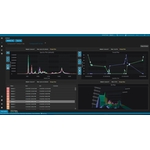
Conventional real-time measurements during UF/DF do not indicate whether aggregation is developing, or whether buffer exchange is truly complete. This understanding is only available through offline analysis, not in real time. Inline Raman spectroscopy analysis – a process analytical technology (PAT) – integrated into the UF/DF flow path, provides continuous, non‑extractive insight into the purification process as it unfolds.

Instead of inferring process state from pressure, flow, or volume alone, teams gain direct visibility into:

  • Protein concentration evolution during UF and final concentration
  • Buffer exchange progression during diafiltration
  • Spectral signatures associated with aggregation behavior

This distinction is critical, because product quality attributes evolve independently of hydraulic stability during UF/DF.

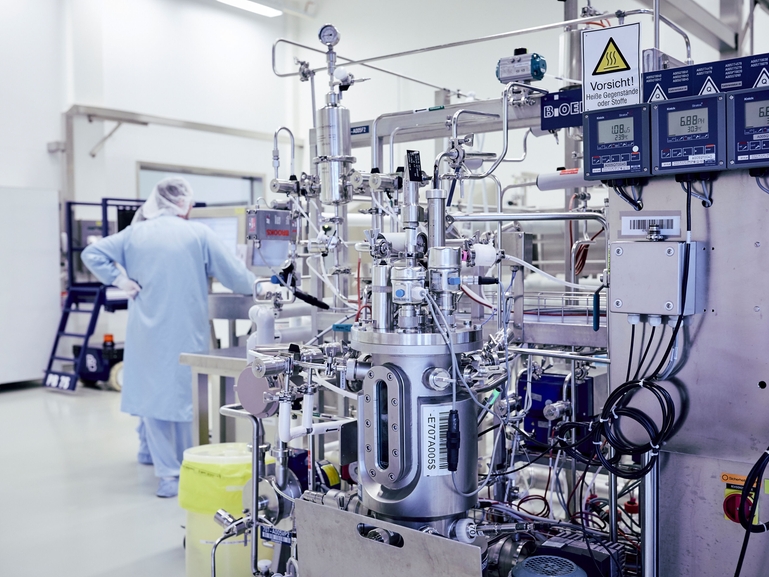
Representative downstream bioprocessing environment @Lonza
Insight

Analytics that keep up with downstream speed

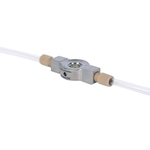
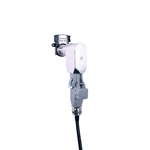
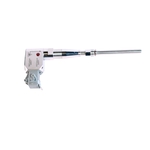
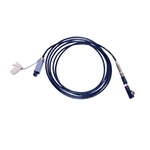
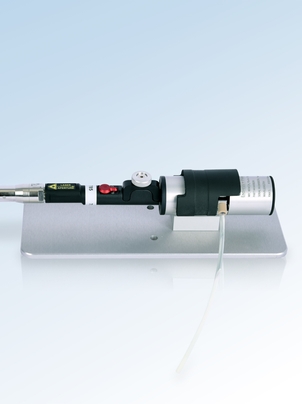
Raman spectroscopy monitoring is deployed via a flow-based Raman assembly designed specifically for downstream purification paths.

The setup supports:

  • Low‑volume, low‑turbidity UF/DF streams
  • Sterile operation with reusable or disposable flow cells
  • Integration into development environments with a path toward cGMP manufacturing

By embedding analytics directly into the flow path, the system aligns with the speed and volume constraints of modern downstream processing (DSP).

Action

Intervening before aggregation becomes a loss

When downstream insight is available during UF/DF, decisions move upstream in time. If aggregation‑related spectral trends emerge inline, teams can still adjust concentration rates, modify diafiltration buffer exchange, or halt the process before final concentration, rather than discovering the issue later by off‑line analytical methods like size-exclusion chromatography (SEC).

By implementing a versatile PAT that delivers highly specific, multi-analyte process insight in real time, teams no longer wait for post‑process confirmation to understand what happened. They can:

  • Detect early aggregation trends while the UF/DF run is still recoverable, enabling mitigation before yield or quality is irreversibly impacted
  • Adjust operating conditions while the process is still running
  • Avoid unnecessary process interruptions
  • Shorten development cycles by reducing rework and repeat runs
Measurable value

What improves when UF/DF is monitored inline

Teams applying inline Raman spectroscopy during UF/DF can document tangible downstream improvements, including:

  • Reduced UF/DF cycle times by eliminating analytical wait periods
  • Lower product loss through earlier aggregation detection
  • Improved batch consistency across biosimilar production runs
  • Less manual intervention and fewer post‑process adjustments
  • Faster DSP development enabled by PAT‑ready process understanding

Beyond yield, earlier visibility into aggregation protects drug substance efficacy, pharmacokinetics, immunogenicity risk, and regulatory acceptability — all of which are directly influenced by aggregate levels in biopharmaceutical products. These benefits compound across campaigns, reducing cost of goods and accelerating time to market.

Downstream bioprocessing scientists in the Life Sciences industry ©Endress+Hauser
Case study

Real‑time UF/DF monitoring at Alvotech

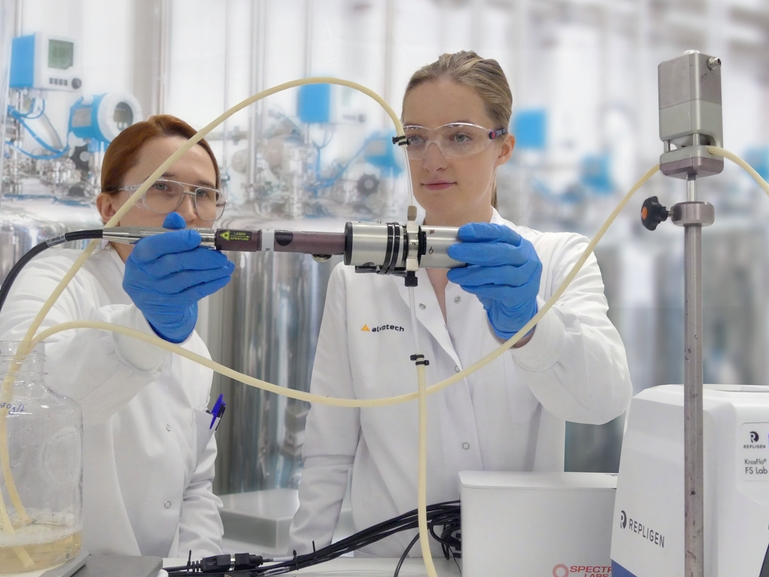
In a downstream development study, Alvotech applied inline Raman spectroscopy for real-time monitoring of protein purification during UF/DF. The objective was not only to observe the process, but to determine whether aggregation risk could be identified early enough during UF/DF to influence downstream decisions in real time.

The approach enabled real-time decision making, such as:

  • Real‑time tracking of concentration changes and other process parameters
  • Detection of aggregation‑related spectral behavior
  • Development of predictive models combining inline Raman spectroscopy with existing analytical references

Beyond the analytical result, the deployment demonstrated how inline Raman spectroscopy can reshape downstream development dynamics — reducing fragmentation and enabling faster, more confident purification decisions, ensuring product quality.

Julia Helgadottir from Alvotech, employee photo

"Implementation of the in-line Raman flow cell into operations promises a more efficient approach, effectively changing downstream development dynamics."

Julia Karitas Helgadottir, DSP Scientist, Alvotech
Product highlights 

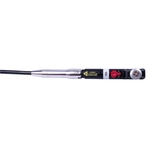
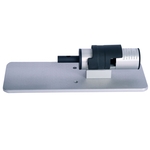
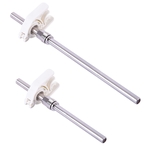
Explore our Raman spectroscopy systems

/
Our expertise

Why Endress+Hauser?

Endress+Hauser supports downstream and PAT teams from process understanding through model development and deployment, helping translate Raman spectroscopy capability into decision‑grade UF/DF workflows.

The focus is not on instrumentation alone, but on enabling earlier intervention, higher yield protection, and more resilient downstream processes in biopharmaceutical manufacturing.

eBook

Bring real‑time insight into downstream operations

This eBook explains how the Raman flow assembly enables inline, real‑time measurement directly within downstream process flows. Learn how continuous monitoring of concentration and composition supports earlier understanding, more confident decisions, and improved control across downstream unit operations — without relying solely on delayed, offline analytics.

Inside, you’ll learn:

  • Where inline Raman measurement adds value across downstream processing steps
  • How real‑time concentration and composition trends improve decision timing
  • Why microvolume, flow‑through measurement fits development and scale‑up workflows
  • How teams reduce analytical delays while improving process understanding and robustness
FAQ

Everything you need to know 

Scientists smiling in an R&D lab ©iStock
Next steps

Contact us

Discuss your process challenges with our Life Science industry experts. We are here to support you.

尾注

Might also interest you