尝试输入关键词、订货号/产品型号或序列号(“CM442”或“技术资料”)进行查找
至少输入2个字符开始搜索。

Ensure polymer plant safety with automated raw material verification

Inline process analytics verifies incoming chemicals before and during unloading, reducing human error and enabling a plant to implement automated alarms and controls directly into synthetic polymer production workflows.

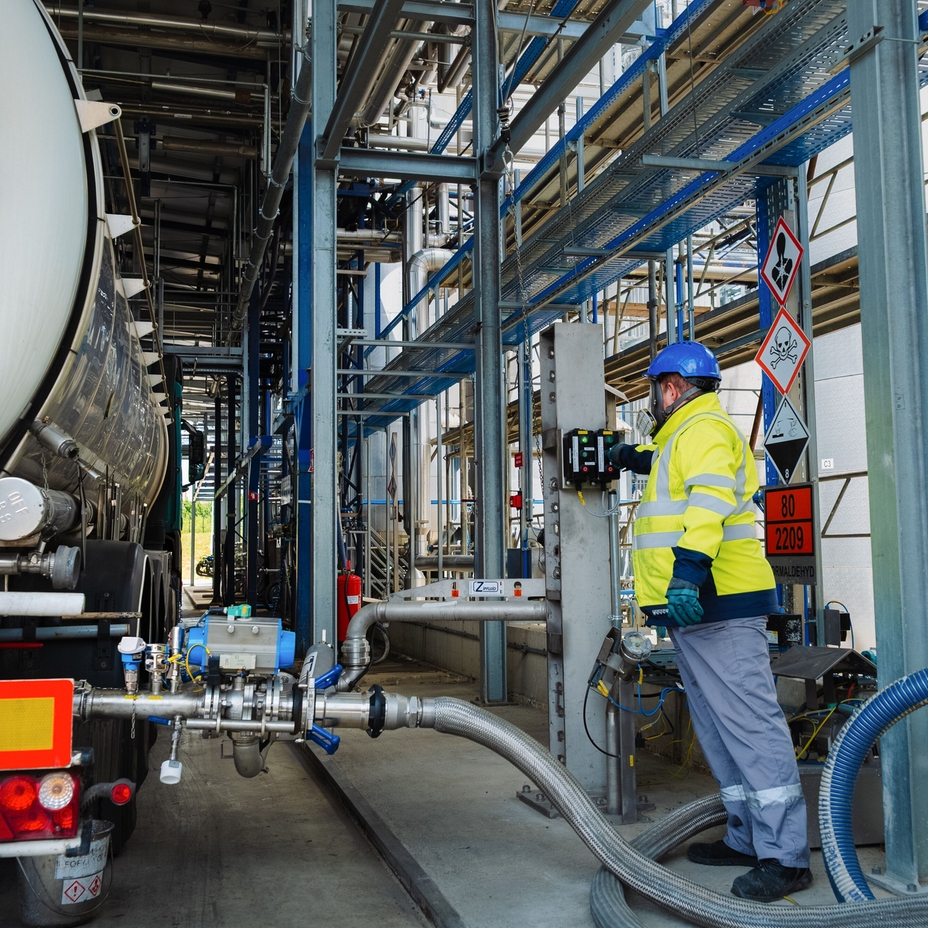
Melamin plant unloading zone with operators in yellow gear and tanks to the right
Introduction

Where risk starts in polymer plants: Chemical unloading

In polymer manufacturing, the highest safety and stability risks are often introduced before production begins. Chemical logistics — especially truck loading and unloading — is the most critical handover point between external supply chains and internal plant operations.

Industry data shows that the majority of transport‑related chemical incidents occur during loading and unloading, not during transit, and that human factors such as miscommunication, procedural gaps, or manual verification errors are the dominant root cause.

Once an incorrect or incompatible chemical enters transfer, the consequences are often irreversible:

  • Contamination of storage tanks
  • Hazardous mixing of incompatible substances
  • Destabilized downstream polymerization reactions
Insight

Why raw‑material verification must be system‑enforced

Polymerization processes are highly sensitive to feedstock identity and purity. Variations in monomer type, solvent identity, or inhibitor presence can compromise both process safety and product stability.

Traditional safeguards — paperwork checks, labeling, or single‑point sampling—depend heavily on human execution and time‑delayed laboratory confirmation. Inline, automated verification removes this dependency, reducing laboratory workload while allowing unloading and release decisions to happen immediately and predictably within operations.

What inline measurements enable operationally:

  • Confirmation of the correct chemical before transfer begins
  • Prevention of incompatible or unintended mixing
  • Stabilization of downstream polymerization through verified feedstocks
  • Reduced operator exposure by minimizing manual sampling

Inline Raman spectroscopy, combined with automated valve control and interlocks, transforms unloading from a manual decision point into a system‑controlled operation.

Action

How unloading workflows change with automated verification

Previously, operators would:

  • Take one sample
  • Send it to the lab
  • Wait for release before unloading

With Raman monitoring, verification now happens continuously and in real time while the material is flowing.

What changes in the real workflow:

  • Transfer is enabled only when identity is confirmed
  • Automated interlocks prevent unloading if a mismatch is detected
  • Continuous confirmation detects composition changes during unloading
  • Decisions are enforced by control logic, not operator judgment
  • Reduced dependence on late-shift laboratory release or manual intervention, enabling more predictable unloading windows and lighter shift presence
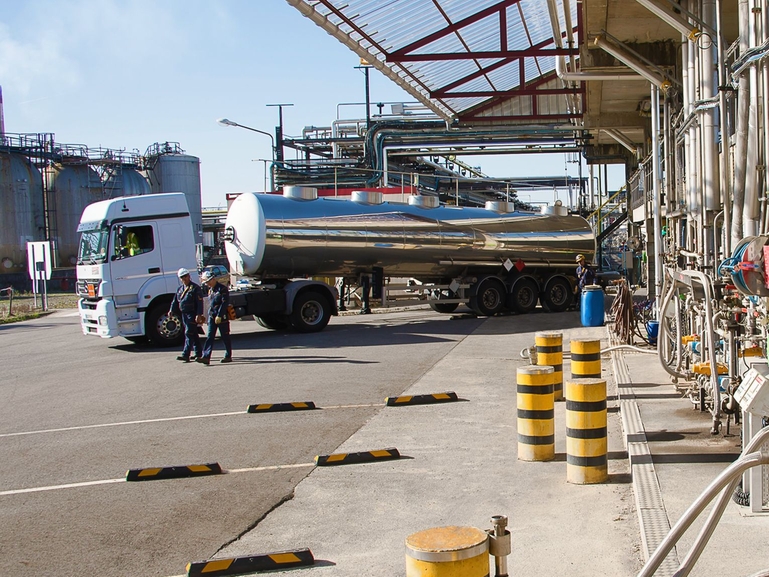
chemical manufacturing plant truck loading station ©Endress+Hauser

Engineered safety at the unloading gate

In polymer manufacturing, the unloading and material handover stage is where safety and process stability are most at risk. By making raw‑material identity visible before and throughout unloading, inline Raman verification shifts control from procedural checks to system‑enforced safeguards.

Transfer is enabled only when the correct material is continuously confirmed and blocked immediately if a mismatch occurs. This removes human judgment from the highest‑risk moment, prevents incorrect or incompatible materials from entering the process, and creates auditable proof that safety is enforced by design — not by procedure.

Measurable value

Technology in practice: Verification where decisions are made

Inline Raman spectroscopy verifies chemical identity from the start to the end of unloading. Measurement is continuous, automatically normalized, and independent of exposure settings, enabling reliable discrimination across a wide range of solvents based on their chemical composition used in polymer and resin production.

Verification happens at the unloading point, where decisions have immediate safety impact — eliminating reliance on delayed lab confirmation and reducing unloading time while improving dock utilization and logistics flow.

What polymer manufacturers can demonstrate in their own operations

With automated raw‑material verification at unloading, polymer producers can demonstrate:

  • Elimination of wrong‑material charging incidents
  • Faster unloading without waiting for lab release
  • Reduced handling and exposure of hazardous chemicals
  • Continuous confirmation of solvent consistency throughout unloading
  • Auditable digital record of correct material entry
  • Faster and more predictable incoming goods inspection without lab dependency
  • Reduced truck waiting times through immediate unloading authorization
  • More stable shift organization enabled by real-time verification, limiting the need for extended afternoon presence

These outcomes are observable in daily operations and aligned with industry recommendations to reduce human‑factor risk in chemical logistics.

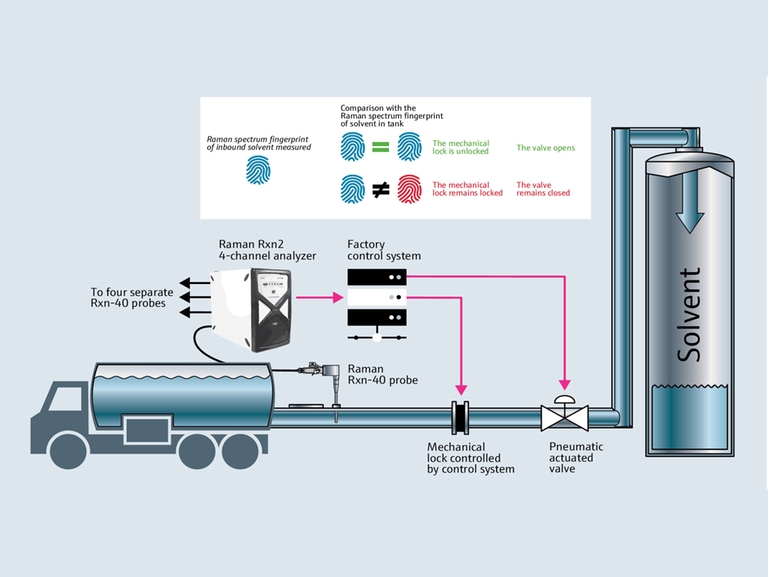
Illustration of truck loading with a Raman system ensuring safe, accurate inline solvent routing ©Endress+Hauser
Illustration of truck loading with a Raman system ensuring safe, accurate inline solvent routing
Case study

Operational certainty at unloading: How Melamin automated identification

Melamin implemented inline Raman spectroscopy to verify every incoming solvent during truck unloading. Identity confirmation drives automated valve routing and interlocks, ensuring that only the correct chemical is transferred to the correct tank.

This approach replaced offline sampling and manual release with continuous online verification, detecting any deviation in composition during unloading. Read the full case study to learn more.

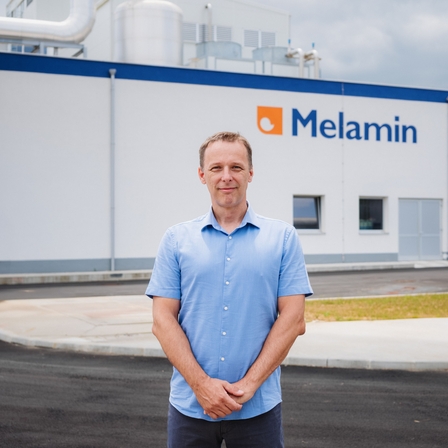
Melamin Technical Manager Dr. Igor Mihelič

"Thanks to the combined expertise and dedication of both teams, we now benefit from comprehensive Endress+Hauser instrumentation, which is crucial for maintaining our plant operations."

Dr. Igor Mihelič, Technical Manager, Melamin
Our expertise

Why Endress+Hauser?

Endress+Hauser supports polymer and chemical manufacturers in building engineered safety across chemical logistics and production. Our solutions integrate process analytical technology directly into safety‑critical workflows, reinforcing control at the point where risk is highest: material handover.

  • Proven expertise in polymer, resin, and elastomer production
  • Reliable instrumentation for hazardous, safety-critical processes
  • Automated material verification embedded in plant workflows
  • Extensive global service network with strong local technical support
Operational rollout

Would earlier, clearer chemical insight improve your process decisions?

See the key questions experienced teams use to evaluate whether Raman spectroscopy would meaningfully improve decision timing and operational outcomes in their process.

Product highlights

Explore our Raman spectroscopy systems

/
FAQ

Everything you need to know

Next steps

Contact us

Discuss your process challenges with our chemical industry experts. We are here to support you.

尾注

Might also interest you