What do skiing and food safety have in common?
At first glance, skiing and food safety seem completely unrelated - but if you take a closer look, there are actually some interesting similarities.
Industry expert Jürgen Ganzmann (Global Industry Manager Food & Beverage) shares some fascinating insights into his hobby and how it relates to the topic.
How to ensure quality in food manufacturing
Quality control in food production encompasses all systematic measures aimed at ensuring product safety, quality and conformity throughout the entire value chain. This means integrating technical, analytical and organizational processes, including the processing of bulk goods, to ensure compliance with legal requirements (e.g., Hazard Analysis Critial Control Point HACCP, ISO 22000, International Featured Standards IFS) and internal quality standards.
To continuously ensure food quality, relevant parameters must be monitored. The terms inline, online, at-line and offline monitoring refer to different approaches to sampling and analysis in industrial processes. Each approach has its own advantages and challenges and is selected according to requirements. Learn more about quality control
Regulations, standards and requirements
The processing and production of food requires particular sensitivity. The laws, guidelines and standards that fundamentally regulate the requirements and pursue the goal of the highest possible food safety are correspondingly strict.
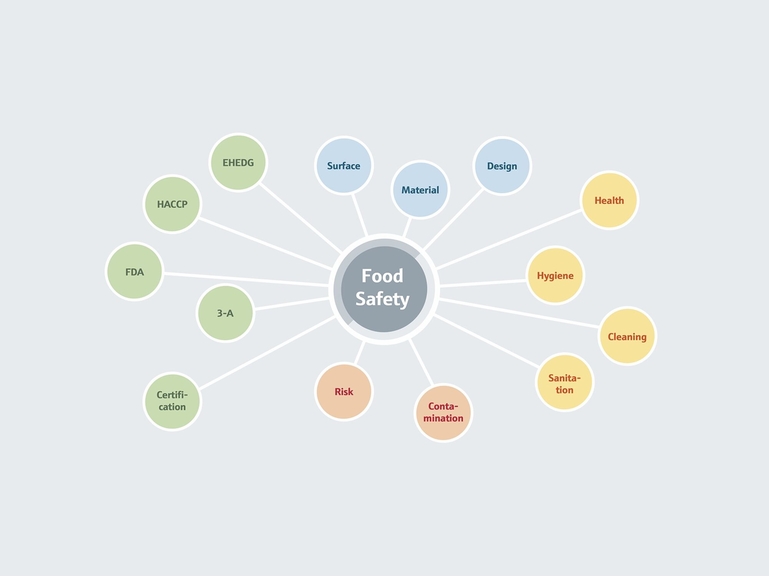
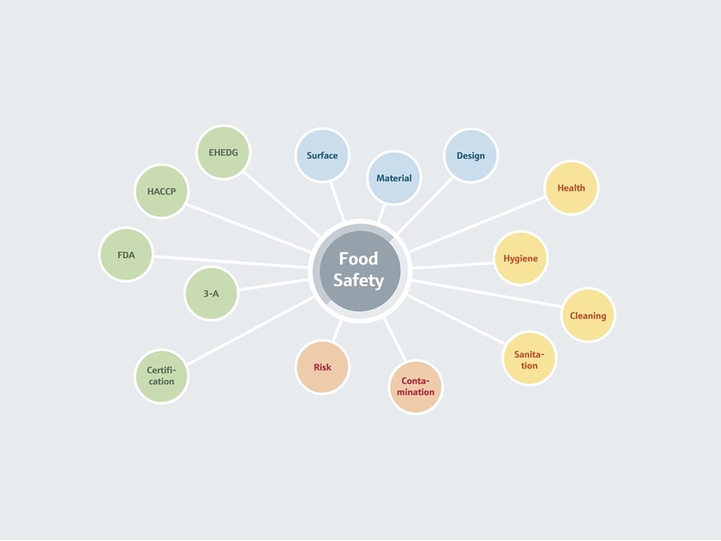
To ensure food safety and regulatory compliance, equipment must meet stringent design, hygiene and sanitation standards - such as conforming to 3-A sanitary requirements and passing EHEDG (European Hygienic Engineering & Design Group) test procedures for hygienic design. Additionally, all food contact materials must comply with international regulations, including FDA's "Generally Recognized as Safe" (GRAS) criteria, the European Union's EC 1935/2004 framework and China's GB 4806 standards, which collectively ensure that materials do not pose chemical risks to food products.
What role does cleanability play?
Food safety and cleanability are interconnected concepts, with clean surfaces and proper hygiene being fundamental to preventing the spread of harmful bacteria. In food production food safety and cleanability are achieved through a combination of rigorous cleaning and sanitation practices, hygienic design of equipment, and adherence to strict protocols.
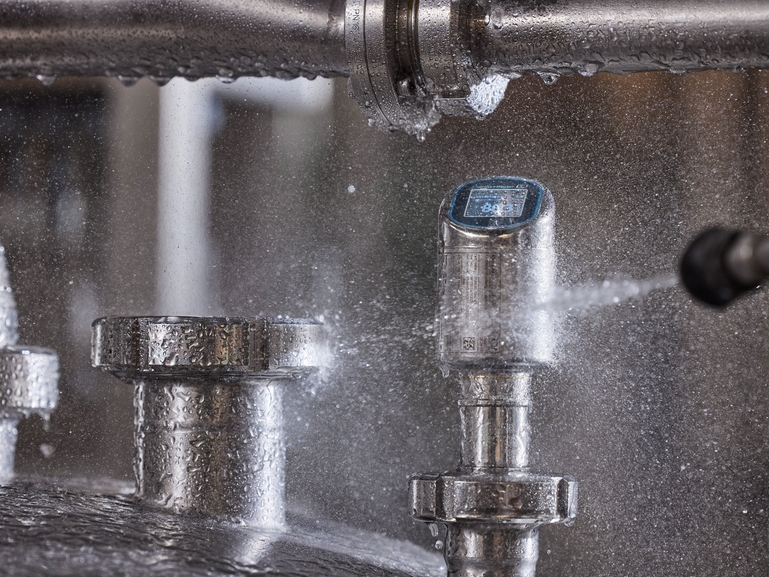
Cleanability refers to how easily a device or surface can be sanitized, while the IP (Ingress Protection) rating indicates how well it's protected against solid objects like dust and liquids. In sanitary or food processing industries, both cleanability and IP ratings are crucial for meeting regulatory standards and ensuring product safety.
Ingress Protection (IP) rating
- IP65: Dust-tight and protected against water jets from any direction
- IP67: Dust-tight and protected against immersion in water for a specified time
- IP68: Dust-tight and protected against continuous immersion in water
- IP69K: The highest rating, protecting against dust and high-pressure, high-temperature steam cleaning
The impact of surface roughness
Surface roughness and cleanability are directly related, with smoother surfaces (low roughness) being significantly more cleanable than rougher ones. Rough surfaces can trap contaminants, promote microbial attachment, and form biofilms, making them harder to clean and increasing the risk of contamination. For applications where hygiene is critical, such as in the food and pharmaceutical industries, selecting a surface with low roughness is a fundamental principle of good design for ensuring effective cleaning and minimizing contamination risks.
Detecting food contamination: From raw material inspection to final product testing
Manufacturers in the food industry must work carefully and continuously check production facilities to eliminate the weakest links that could become a source of contamination. This is especially important when changing recipes or cleaning agents/procedures, as conditions may change. It is a wise decision to incorporate good hygiene practices and equipment that meets hygienic design criteria into production. This can significantly reduce the risk of foodborne illness.
From raw materials such as water, sugar or grain to the final product, there are numerous measurement principles and methods that help detect and prevent contamination or quality defects.
From risk to control: How HACCP safeguards food safety
This is a systematic, preventive approach for food safety that identifies biological, chemical and physical hazards and establishes control measures. It involves a seven-step process: conducting a hazard analysis, identifying Critical Control Points (CCPs), setting critical limits, establishing monitoring procedures, developing corrective actions, implementing verification procedures, and maintaining documentation and records. This system proactively reduces risk and ensures product safety from production to consumption.
The responsibility for risk management with HACCP (Hazard Analysis Critical Control Point) rests with the food manufacturer. Endress+Hauser supports you in all areas of the cycle to ensure food safety and effectively implement HACCP requirements. Because only precise monitoring and measurement results allow data-based and relevant actions.
How to manage explosion risks
Explosion protection is a vital component of food safety in the food and beverage industry, particularly where airborne dust or flammable vapors may create hazardous conditions. To mitigate these risks, companies implement a three-part strategy: preventing the formation of explosive atmospheres, eliminating ignition sources, and minimizing damage in the event of an explosion. This involves using certified explosion-proof electrical equipment and systems that comply with international standards such as ATEX (EU), FM and CSA (North America), NEPSI (China) and IECEx. Additional measures include strict cleaning and ventilation protocols and the installation of safety mechanisms like pressure relief vents to ensure a safe and compliant production environment.
Safe and transparent: Traceability and tracking systems
Food tracking and traceability involve systems that document the entire movement of food and its ingredients, from farm to consumer, enabling both forward and backward tracking through the supply chain. This process enhances food safety by allowing for rapid identification of the source of issues like contamination or illness, facilitates quick recalls, promotes transparency, builds consumer trust and helps comply with regulations.
Thanks to automation solutions, employees can spend less time conducting manual and time-consuming tasks. In terms of food tracking, software can be used to print labels, for example. Additionally, artificial intelligence is being applied to reduce the cases of foodborne illnesses and human errors.