现场仪表
Optical analysis
Back to 现场仪表
Optical analysis
Comprehensive lab and process optical analysis systems for solids, liquids, slurries, particles and gases
F
L
E
X
FLEX产品选型
仪表技术性能
选型便捷程度
仪表技术性能
选型便捷程度
仪表技术性能
选型便捷程度
仪表技术性能
选型便捷程度
仪表技术性能
选型便捷程度
New
比较
Measured variables
Gas components, calorific value, density, Wobbe index, molar mass, compressibility
Measuring medium
Natural gas, biogas, air, H2, O2, N2
Analysis time
≥45 seconds

GM32
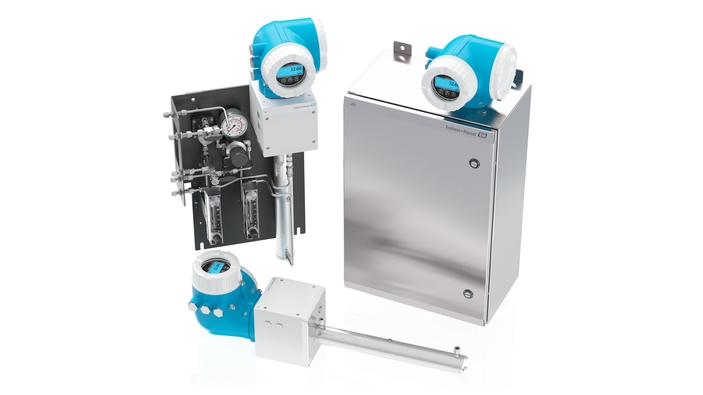
即使在防爆区域内也可直接快速检测腐蚀性气体
测量组分
NO, NO2, NH3, SO2
工艺过程温度
≤ +650 ℃ 根据要求提供高温版本
环境温度
–20 °C ... +55 °C 温度变化最大为 ± 10 ℃/h
防护等级
标准型:IP 65 , IP 69K 防爆型:IP 65
测量值
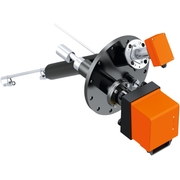
粉尘浓度(根据重量对比测量), 气体流速, 气体压力,气体温度
工艺过程温度
–20 °C ... +200 °C
工艺过程压力
–70 hPa ... 10 hPa
支持的产品
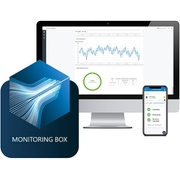
FLOWSIC200, GM32, MCS100FT, MCS200HW, MCS300P, MERCEM300Z, VICOTEC320, VICOTEC450, VISIC100SF, VISIC50SF, DUSTHUNTER SB100, DUSTHUNTER SP100, FLOWSIC100, MARSIC300, VICOTEC410, GMS800 (DEFOR + OXOR)
数据输出
Monitoring Box frontend Alerts in the dashboard Notifications via email Data export (CSV) Data integration into foreign systems (API)
托管
Off-premise: https://monitoringbox.endress.com Industrial PC, other solutions on request
合同类型
SaaS (Software as a Service)
工艺过程温度
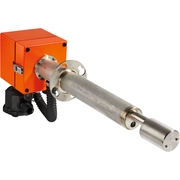
-40 °C ... +220 °C
测量范围
散射光强度: 0 ... 7.5 mg/m3 / 0 ... 3,000 mg/m3 测量范围可自由选择;九种预设测量范围 (0 ~ 7.5/15/45/75/150/225/375/1,000/3,000 SI)
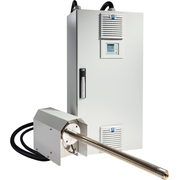
测量值
CO2, SO2, NO, NO2, CO, NH3, H2O, CH4
环境温度
0 °C ... +50 °C (可选配空调,带空调环境温度可达到55℃)
符合性声明
MARPOL 附则 VI 及 2008 NTC – MEPC.177 (58) 废气净化系统指南 - MEPC.184(68) SCR 脱硝系统指南 - MEPC.198 (62) DNV GL 标准型认证 (2012) IACS E10 和主要船级社规则
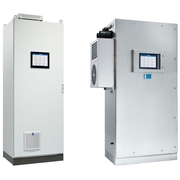
Measured variables
CH4, CO, CO2, Corg, HCl, H2O, NH3, NO, NO2, N2O, O2, SO2
Ambient temperature range
+5 °C ... +50 °C
Process temperature
≤ +550 °C
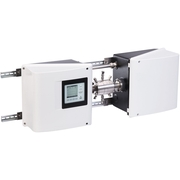
测量范围
60 多个不同的测量组件可供选择(取决于浓度和待测 气体的组分) 最多同时使用 6 个组件 每个组件有 2 个测量范围 自动选择测量范围(可调) 每个组件有 2 个限值 取决于应用情况和测量组件组合的测量范围
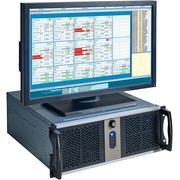
值类型
5 s 值, 网格值, 日均值, 月均值, 年均值, 动态平均值,光栅货运, 日排放量, 月负荷, 年排放量, 月平均值年数> 排放限值, 日平均值年数 > 110% 排放限值, 光栅值95% 年百分位数 < 200% 排放限值, 无效日平均值的年数
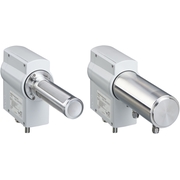
测量值
O2
测量范围
O2: 0 ... 5 Vol.-% / 0 ... 100 Vol.-%
Do you need help selecting your optical analysis system?
We support you in selecting and configuring best-fit products for your measuring tasks and applications.
About optical analysis for solids, liquids, slurries, particles, and gases
Endress+Hauser has made significant investments in our customers’ futures by offering a comprehensive portfolio of atomic and molecular analysis tools for laboratory, process, and emissions monitoring. Our world-leading optical analysis systems help customers optimize key industrial processes and more reliably monitor product quality and emission in real time. Key extractive and in-situ technologies include tunable diode laser absorption spectroscopy (TDLAS), quenched fluorescence (QF), Raman spectroscopy, NIR, IR, UV/Vis, and atomic absorption.
Process transparency: Data from optical analysis provides transparency in processes, allowing for better decision-makingReal-time measurement: Measurements in seconds or minutes enable users to minimize downtime and control operational costs in industrial processesQuality and reliability: Optical analysis systems help customers optimize key industrial processes and reliably monitor product qualityNon-invasive, hands-free measurement: Inline optical analysis enables safe, efficient, and non-destructive measurement without sample prep or handling High plant availability: High plant availability is achieved through the installation of easy-to-operate and maintain optical systemsCompliance: To minimize emissions in a targeted manner, it is necessary to reliably analyze and monitor gas concentrations
Frequently asked questions
What is optical analysis?
Optical analysis studies how light interacts with matter to identify and quantify chemical compositions. It involves examining the behavior of electromagnetic radiation—particularly in the ultraviolet, visible, and infrared regions of the spectrum—as it is absorbed, emitted, scattered, or transmitted by materials. This type of optical analysis is fundamental in fields such as spectroscopy, imaging, and microscopy, where understanding the properties of light and its interaction with matter reveals critical information about molecular structure, composition, and dynamics. To fully grasp how optical analysis works, it is important to understand the nature of electromagnetic radiation and how it interacts with matter.
What is electromagnetic radiation?
The electromagnetic spectrum represents the full range of all frequencies or wavelengths of electromagnetic radiation. Electromagnetic radiation is classified by wavelength into radio waves, microwaves, infrared, visible light, ultraviolet, X-rays, and gamma rays. Electromagnetic radiation can be expressed in terms of energy, wavelength, or frequency. The behavior of electromagnetic radiation depends on its wavelength. Electromagnetic radiation has both wave and particle properties. A charge at rest produces an electric field and a moving charge generates both electric and magnetic fields. Accelerated charges emit electromagnetic radiation.
How does electromagnetic radiation interact with matter?
The interaction of electromagnetic radiation with matter can involve absorption, emission, or scattering of radiation. The magnitude of interaction between electromagnetic radiation and matter depends on the size of the molecular dipole moment. Different regions of the light spectrum are used to understand various molecular or atomic properties.
What is spectroscopy?
Spectroscopy is the study of the interaction of electromagnetic radiation with matter involving absorption, emission, or scattering of radiation. It has been an essential tool for understanding atomic or molecular composition and structure.
What are spectroscopy techniques and/or measuring methods for chemical analysis?
Since 2012, Endress+Hauser has invested in technologies for inline or laboratory optical analysis, gas monitoring, and laboratory automation, including the acquisitions of SpectraSensors, Kaiser Optical Systems, Analytik Jena , and Blue Ocean Nova AG, as well as a strategic partnership with SICK AG . Within this expanded analysis portfolio, we offer a full range of spectroscopy tools. We use spectroscopy, an optical analysis technique, to understand atomic or molecular composition because of its specificity, ease-of-use, and ability to provide insight into a product or process. Spectroscopic techniques in chemical analysis use light to probe the composition, structure, or concentration of substances. Spectroscopy techniques provided by Endress+Hauser include:
Raman spectroscopy – Detects molecular vibrations by analyzing scattered laser light, useful for identifying chemical bonds and structures.Tunable diode laser absorption spectroscopy (TDLAS) – Uses laser light tuned to specific wavelengths to measure gas concentrations with high sensitivity.Quenched fluorescence (QF) – Measures light emitted by excited molecules; quenched fluorescence tracks changes in luminescence intensity and decay to detect analytes like oxygen.UV-Vis-NIR spectrophotometry – Measures reflectance, absorbance, and transmittance across ultraviolet, visible, and near-infrared wavelengths. Infrared (IR) spectroscopy – Analyzes absorption of IR light to identify functional groups and molecular structures. Atomic emission and absorption spectroscopy – Measures light emitted or absorbed by atoms to determine elemental composition.
These optical analysis techniques rely on the interaction of electromagnetic radiation with matter, making them powerful tools for both qualitative and quantitative chemical analysis.
What is Raman spectroscopy?
Raman spectroscopy is a powerful molecular spectroscopy technique that analyzes the vibrational modes of compounds and provides molecular fingerprint identification of materials through spectral analysis. It typically uses visible or near-infrared laser light as the source of electromagnetic radiation. The method measures the inelastic scattering of photons, known as Raman scattering, which occurs when light interacts with molecular vibrations. Unlike absorption-based techniques, Raman spectroscopy is based on scattering of light and does not require a defined path length. It is sensitive to changes in the polarizability of the electron cloud during light interaction, making it ideal for measuring symmetric bond vibrations. Like other molecular spectroscopy techniques, Raman spectroscopy is used to identify chemical composition and molecular structure. However, it offers important advantages, including its high specificity and ability to measure in aqueous samples. An aspect of Raman spectroscopy that is advantageous in a process setting is its ability to scale a quantitative analytical model from R&D to manufacturing with minimal scale-specific data.
What is ultraviolet-visible spectroscopy (UV/Vis)?
UV/Vis is an analytical technique that measures the absorption of ultraviolet and visible light by a substance. It operates within the wavelength range of approximately 200–800 nm and is commonly used to determine concentration, chemical structure, and purity of samples. UV/Vis analysis is widely applied in pharmaceuticals, environmental testing, and chemical research for fast, reliable results.
What is near infrared (NIR)?
Near-infrared (NIR) refers to the region of the electromagnetic spectrum with wavelengths ranging from approximately 780 nm to 2500 nm. NIR spectroscopy is widely used in optical analysis to identify chemical compositions, monitor material properties, and perform non-destructive testing. It is especially valuable in industries like hydrocarbon processing, pharmaceuticals, agriculture, and food processing for rapid, accurate analysis without sample preparation.
What is absorption spectroscopy?
Absorption spectroscopy measures the absorption of specific wavelengths of electromagnetic radiation by atoms or molecules in a sample. Absorption occurs due to the selective removal of certain frequencies by matter, revealing valuable information about the sample’s composition and concentration.
What is tunable diode laser absorption spectroscopy (TDLAS)?
TDLAS is a form of infrared spectroscopy that analyzes absorption related to changes in dipole moments of molecules during vibrational transitions. It uses infrared or near-infrared laser light tuned to a gas’s unique absorption lines to measure the concentration of specific analytes with high precision. The technique is governed by the Beer-Lambert Law , which relate the amount of light absorbed to the properties of the absorbing material. By applying Beer-Lambert Law, TDLAS quantifies how much light is absorbed at specific wavelengths, enabling accurate measurement of trace gases.
What is quenched fluorescence (QF)?
Quenched fluorescence (QF), also known as fluorescence quenching, is an optical technique that measures how the fluorescence of a molecule is reduced or "quenched” by oxygen. Fluorescence refers to the luminescence of light by an excited molecule almost immediately after it absorbs light. This method typically uses ultraviolet (UV) or visible light as the source of electromagnetic radiation. The technique involves the excitation and emission of light by fluorescent molecules, and the degree of quenching provides valuable information about the presence or concentration of specific analytes, such as oxygen.
显示更多
显示更少
拉曼光谱分析仪
拉曼光谱分析仪 - 可靠测量化学成分
下载
TDLAS和QF分析仪技术指南
TDLAS和QF分析仪技术指南 - 操作原理、配置和认证信息
下载
排放监测解决方案
PDF, 4.5 MB
一套完整的持续排放监测解决方案。我们提供面向未来的定制化技术,精准适配各工业领域的测量需求。
下载
Dust and particle measuring devices
PDF, 3 MB
Comprehensive portfolio of dust and particle measuring devices
下载
Quality & Compliance
提高工厂安全性,确保产品质量,优化生产运营。采用拉曼光谱技术实时测定样气组份和分子结构,广泛适用于从实验室至生产的各类过程应用。
产品
可靠的H2 S测量有助于石油与天然气行业提升气体质量,改进过程控制,提高资产完整性。
相关主题
优化提高工厂的安全性和可用性。可调谐二极管激光吸收光谱(TDLAS)技术能够快速、可靠、实时测量过程气体中的杂质浓度。
/
我们非常重视您的隐私权
我们将Cookie用于提高网页浏览体验、收集统计数据来优化网站功能,以及投放定制化广告或内容。
选择“全部接受”,即表示您同意我们使用Cookie。
更多细节请查阅我们的 Cookie政策 。

定制
仅接受基本的
全部接受