尝试输入关键词、订货号/产品型号或序列号(“CM442”或“技术资料”)进行查找
至少输入2个字符开始搜索。

Digitization of process plants – pure and simple

IO-Link technology is growing in popularity as a viable option for digitizing compact process units with moderate measurement requirements.

12.01.2026 文字: Christine Böhringer 图形设计: 3st kommunikation
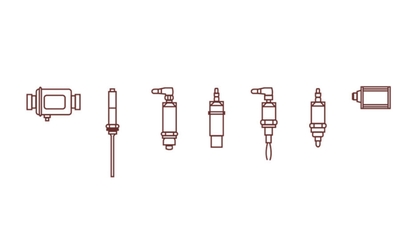
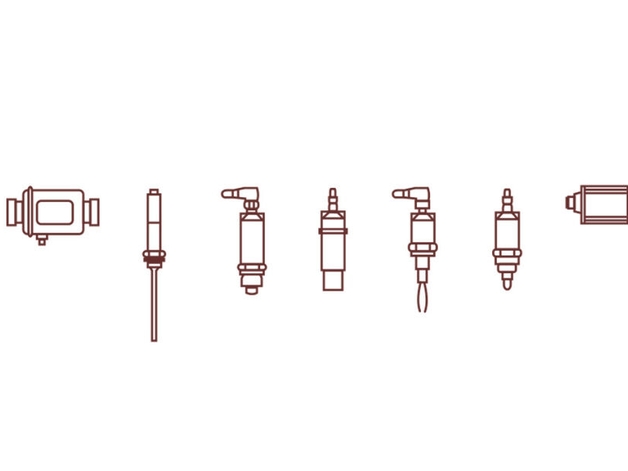
Endress+Hauser offers an extensive range of IO-Link sensors for the food & beverage industry.

Digitization at the field level is a decisive success factor for securing long-term competitiveness. Choosing the right communication technology depends on application, sensor complexity, and network requirements.

Industrial Ethernet is evolving into a groundbreaking standard for the automation of process engineering plants, not least due to the introduction of Ethernet-APL. Seamless communication without protocol conversion unlocks added-value functions of intelligent measuring devices and actuators in the best possible way, allowing for optimal plant operation.

However, every plant also has a variety of limit switches and potentially less critical measurement points that can be equipped with simpler instrumentation. In this case, IO-Link makes an important contribution to the complete digitization at the field level and becomes a useful supplement, particularly in the Food and Beverages and Life Sciences industries.

How IO-Link works

Endress+Hauser offers an extensive range of IO-Link sensors for the food & beverage industry.

1. Extensive offering

Endress+Hauser offers an extensive range of IO-Link sensors tailored to the requirements of the food & beverage industry.

An IO-Link master typically supports four or eight sensors, connected individually.

2. Efficient communication

An IO-Link master typically supports four or eight sensors, connected individually using unshielded standard cables. They communicate via the IO-Link protocol.

The sensors continuously transmit measurement and status data to the master.

3. Real-time data

The sensors continuously transmit measurement and status data to the master, which forwards it to the control system via whatever fieldbus – or indeed Ethernet – that the plant operates with.

The master can upload parameters to the devices and read their diagnostic data as required.

4. New possibilities

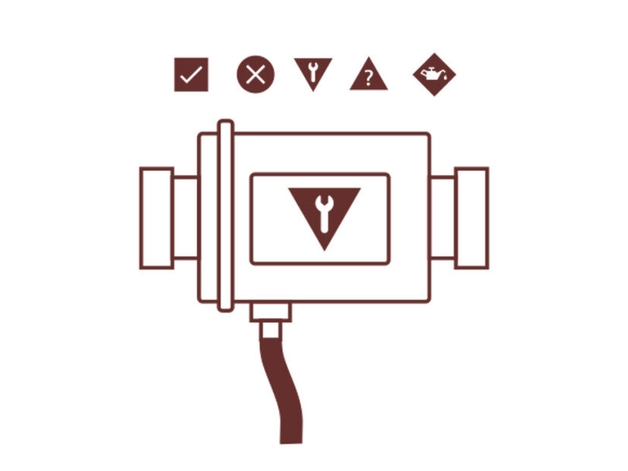
Conversely, the master can upload parameters to the devices and read their diagnostic data as required, enabling remote maintenance and monitoring.

What about Cybersecurity?

Digitization can be daunting; while it brings new opportunities, it also brings challenges, especially around the topic of Cybersecurity. The point-to-point bidirectional architecture of IO-Link, coupled with an IO-Link master’s ability to encrypt data, adds an additional layer of protection for your processes. By implementing IO-Link, you strengthen your plant’s defenses against external cyber threats and safeguard critical processes.

How to decide which technology is a fit for your plant?

Is digitization at the field level inherently complex and reserved for specialists? According to Franz Durmeier, Head of Digital Integration at Endress+Hauser, the answer is: not necessarily. If the project involves complex sensors, critical measuring points or larger distances, the digital integration expert at Endress+Hauser recommends industrial Ethernet so that advanced functions of measurement devices and data analytics can be fully used. “But within a smaller area, for switches and simple sensors, IO-Link is a good option,” he says. As it can run on the backbone of an existing Ethernet or fieldbus structure, non-critical measurement points can cost-effectively be digitalized, which improves monitoring and maintenance.

IO-Link is an open digital communication standard introduced roughly two decades ago for factory automation. Its bidirectional architecture, cost efficiency, and ease of implementation have since attracted interest from the process industry. Unlike classic bus systems, IO-Link is based on a point-to-point topology, with each sensor connecting directly via a standard cable to an IO-Link master. This in turn integrates seamlessly into commonly used fieldbuses and control systems, enabling two-way data exchange.

IO-Link’s simplicity and compatibility make it particularly suitable for skid-mounted systems in food applications. The technology is generally ideal for small-footprint applications with a limited number of measuring points – in dosing, filling and clean-in-place systems, for example, or utilities and water treatment. The 20-meter maximum cable length and the data transfer speed – roughly comparable to a 90s-era modem – are more than enough. “For these applications, Endress+Hauser offers a comprehensive portfolio of hygienic IO-Link products that meet all relevant process parameters,” says Durmeier.

资料下载

查找更多资料

document icon
Company magazine 'changes' 2/2025
How digitalization is gathering pace
download icon 下载