尝试输入关键词、订货号/产品型号或序列号(“CM442”或“技术资料”)进行查找
至少输入2个字符开始搜索。

A marathon with hurdles

How can the process industry achieve sustainable transformation? Right now, it’s clearer than ever that what’s needed is staying power paired with greater effort. It is also clear just how much this extra push can pay off.

06.05.2026 文字: Armin Scheuermann 图形设计: Andrea de Santis
How can the process industry achieve sustainable transformation?

It was the ultimate display of rhythm and effortless control: On 7 August 2012, Australian athlete Sally Pearson cleared hurdle after hurdle with clockwork precision at London’s Olympic Stadium, sprinting the 100 meters to the finish line in just 12.35 seconds. Olympic record. Gold medal. Victory. But that seemingly effortless flair was the culmination of a career that had been anything but smooth. Having overcome falls, disqualifications and long injury breaks, Pearson became world-class not because she was unbeatable but because she never quit. Again and again, she picked herself up, got back on the track, honed her technique and regained her rhythm.

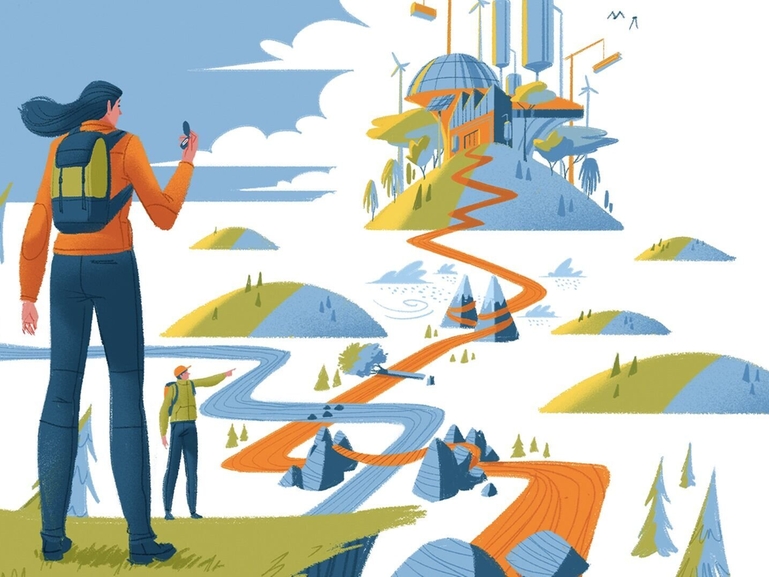
The process industry is likewise in the midst of a race. The finish line is well defined: green supply chains, circularity and net-zero emissions. But the route to this sustainable, climate-neutral future is anything but a straight line. And with countless hurdles along the way, trips and slip-ups are virtually inevitable. A case in point is BASF and Yara’s premature termination of a project to build an ammonia plant in the US state of Louisiana that had planned to produce 1.4 billion tonnes of low-carbon ammonia annually with the aid of carbon capture and storage.

How can the process industry achieve sustainable transformation? ©Endress+Hauser

Tougher conditions

Economic uncertainty was the official reason given for the exit. But in reality, the scrapping of this flagship project for sustainable transformation was due to fundamental changes in the business climate. Companies are now grappling with political turmoil, international trade conflicts and volatile energy markets – a situation compounded by demographic change and digital disruption. Faced with this highly changeable environment, companies are reassessing their projects and being more cautious in their investment decisions.

When the Paris Climate Accord was signed in 2015, there was a global groundswell of public support for collective action to limit global warming. Ten years later, little remains of this positive momentum. Political support is fading in many countries, not just in the US. In Europe, as elsewhere, there is a growing chorus of voices warning against further burdens on industry. This shift in sentiment is shaping the regulatory environment and hence directly affecting the pace of climate action. Which raises the question: How can the process industry achieve sustainable transformation in an increasingly challenging environment?

Why the commitment to change remains strong

The only certainty here is that ‘business as usual’ is not an option. A recent study by PwC shows that climate risks, such as extreme weather, disrupted supply chains and water shortages, have moved from theoretical scenario to business reality. Meanwhile, consumers are demanding more of the companies they buy from. According to the European Environment Agency, two thirds of people in Europe – and over half in China and the US – are mindful of the impact on climate change in their product purchase decisions. Similarly, the investment sector is increasingly sanctioning companies with no ESG strategies by withdrawing capital or imposing higher borrowing costs.

And yet the transformation hinges on something else entirely: the fact that the opportunities outweigh the risks. “Companies that use sustainability data benefit from better decisions and a stronger position in the market,” the PwC study’s authors write. Similarly, almost 90 percent of the companies questioned in a global survey by Morgan Stanley indicated that they saw sustainability as an opportunity to create long-term value. Over 80 percent of the companies said they were seeing quantifiable returns on investment in sustainability. Long story short: Done right, sustainability pays.

How can the process industry achieve sustainable transformation? ©Endress+Hauser

Strategies for successful change

The American business futurist Jonathan Brill speaks of a competitive edge for companies that have embraced early and systematic integration of sustainability. For him, sustainability is more than merely a moral imperative or tool for protecting the environment; it is a core resilience strategy in an age of permanent disruption.

In his book Rogue Waves, he describes how companies today are dealing with a rising tide of multiple colliding risks. Companies that are merely reactive in the face of this situation risk sinking. But those that anticipate these rogue waves and prepare accordingly can actually ride them to achieve transformation and growth. In this context, Brill says, sustainability works like a stabilizer: It forces companies to make their value chains more robust, reduce dependencies, respond more flexibly to regulatory changes and grow their ability to innovate. Through volatile times in particular, he argues, a sustainable business strategy helps a company not just to withstand external shocks but to actively use them as impetus for positive change.

Here, it is important to take the right approach to transformation. A good strategy allows quick wins while maintaining focus on the future – on long time horizons and long-term growth. According to Goutam Challagalla, Professor of Strategy and Marketing at the IMD Business School in Lausanne, Switzerland, successful companies don’t place sustainability goals above all else, nor do they confine themselves to the legal bare minimum. Challagalla has identified what he calls ‘clean winners’ – companies that view sustainability as the core of value creation, growth and competitiveness. Clean winners integrate sustainable thinking into their innovation processes and tie it to quantifiable customer value.

Starting with efficiency

Many companies begin this strategic alignment by focusing on efficiency. Everything that helps reduce energy consumption, conserve resources, improve processes and increase productivity tends to deliver rapid results – both environmentally and commercially. The International Energy Agency (IEA) notes that “in the industrial sector, energy management can lead to more than 10% in annual energy cost savings within three years, and up to 60% over the longer term.” Moreover, companies that reduce their consumption of energy or raw materials are less tied to volatile markets and geopolitical developments.

In the facilities operated by global chemicals giant BASF, 450 different measures yielded a 200,000-tonne reduction in CO2 emissions in 2024 alone. And at Covestro, the energy input per tonne of product fell by 40% over the period from 2005 to 2022. Both companies use digitalization and AI to generate rapid insights and make data-driven decisions. Covestro leverages AI-driven processes to shorten the reaction and distillation phase of polyester production. This not only minimizes resource use but also increases production capacity. Further, the company uses data analytics for early detection of anomalies and hence improvements in plant availability.

Digitalization is also fundamental to solutions that stay effective across different manufacturers and industries. The seamless data exchange that comes from digitalization is critical to achieving the closed material cycles needed for circularity. In Brazil and Canada, BASF, Henkel and other partners are collaborating on a pilot project for digital traceability of plastics. This involves using blockchain technology and physical markers to help connect the entire value chain, from raw material to recycling. The goal is to achieve better transparency around material quality and, from there, significantly improve recycling efficiency and effectiveness.

关键点

80%

of an industrial product’s environmental impacts are determined in the design phase.

关键点

70%

of all millennials and Gen Zs consider environmental sustainability important when choosing an employer, a study by Deloitte has found.

How can the process industry achieve sustainable transformation? ©Endress+Hauser

Innovation as a core competency

Of course, the more efficient companies make their processes, the more capital and resources they free up for the big, long-term transformation projects. Circularity and the energy transition require innovation on a massive scale, sustained over a multi-generational timeline. Companies must transition their processes to renewables, replace fossil inputs with non-fossil or low-carbon alternatives and recycle their production waste into feedstock. Fossil-based value chains must be phased out entirely, with new green value chains built in their place

In the case of major emitters, this calls for huge shifts in technology. The steel industry must substitute direct reduction plants for blast furnaces. The chemical industry must find ways of manufacturing ammonia, ethylene and methanol using climate-neutral processes. And the cement industry? Currently, some two-thirds of emissions there are process related. The only way to avoid them is through new processes or technologies, such as carbon capture and storage.

Joining forces

More and more companies are realizing that the only way to overcome challenges like these is to work together. The result is collaborations and entire ecosystems in which manufacturers, customers, suppliers and the scientific community pool their knowledge and resources.

The Global Impact Coalition is an example of this new culture of cooperation. Incubated by the World Economic Forum, it is an alliance of companies seeking to co-develop key technologies for various processes, including CO2 utilization and plastics recycling, through to market readiness. There is a similar spirit at Energy Transition Campus Amsterdam, where Shell is working with partner companies, startups and universities to develop solutions for the energy transition. And SSAB (steel), LKAB (mining) and Vattenfall (energy) have joined forces in the quest for a breakthrough in the production of green steel. They have formed the joint venture Hybrit to share infrastructure, expertise and – not least – risk.

No straight lines to success

Cooperation and digitalization facilitate innovation, which accelerates industrial transformation. But they also make clear the transformation endeavor’s complexities and colossal scale, with each and every step toward a more sustainable future requiring time, effort and money. Add political and economic uncertainty to the mix, and it’s clear that every step must be rooted in a strategy that is firmly focused on the goal but still allows considerable flexibility along the way. The strategy must be able to accommodate pauses, detours and new ideas. It must be visionary, yet pragmatic.

If that sounds daunting, then perhaps we can draw courage from the story of Sally Pearson’s athletic career. She was blessed with immense natural talent as a hurdler. But the technical precision that set her apart from the rest in her sport? That was the result of perseverance and unrelenting effort, backed by a team who supported her at every critical moment. Crucially, it was the product of an iron will that helped her overcome setbacks.

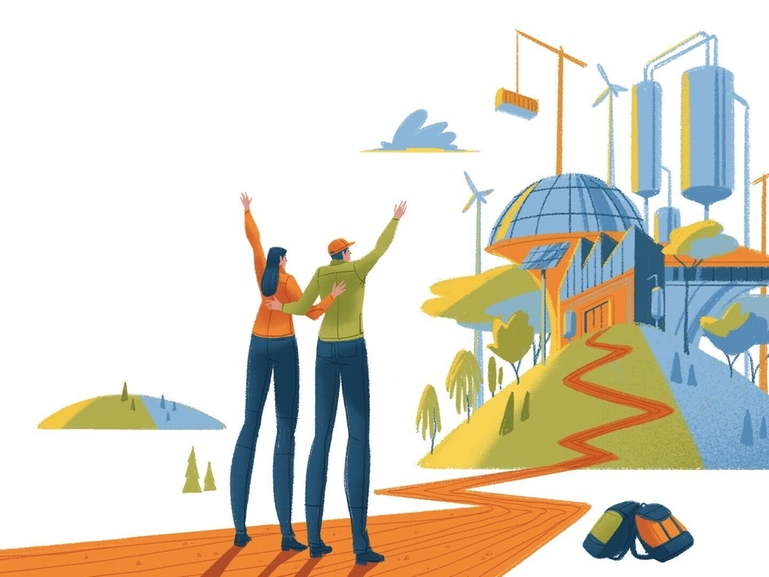
A similar approach may well yield success when it comes to sustainable transformation. The process industry certainly has what it takes: knowledge, innovativeness and networks. What counts is the will to stay in the race.

Armin Scheuermann

The author, Armin Scheuermann (58), is a chemical engineer and technical journalist. After training as a chemical laboratory technician, he studied chemical engineering and worked for 25 years as Editor-in-Chief of the trade journal Chemie Technik. He writes on a range of subjects, including plant engineering, chemical and pharmaceutical production processes, decarbonization, hydrogen technology and all aspects of process automation.

过往活动报道

资料下载

查找更多资料

document icon
公司杂志《Changes》2026年第1期 PDF, 7.5 MB
引领可持续转型
download icon 下载