尝试输入关键词、订货号/产品型号或序列号(“CM442”或“技术资料”)进行查找
至少输入2个字符开始搜索。

How MES and DCS shape cybersecurity in process industries

Manufacturing execution systems (MES) and distributed control systems (DCS) provide tailored control for your automation initiatives and, when integrated with real-time analytics, help deliver greater efficiency, precision, and resilience.

Man looking at multiple screens in a process plant control room

As digitalization in the process industry progresses, with it comes an increased flow of data from both information technology (IT) and operation technology (OT) applications. But how do you securely leverage this data to optimize your plant's performance and productivity?  

Leveraging this data requires a digital bridge between the high-level enterprise planning system (ERP) - the IT, and the individual assets and their direct control systems – the OT. Enter manufacturing execution systems (MES) and distributed control systems (DCS), comprehensive software systems that leverage data to monitor, track, document, and even control processes in real-time. 

Process automation used to be about keeping plants running. Today, it is about executing production correctly and to the highest standard, across systems, people, and networks. By facilitating the seamless flow of data, MES and DCS play an integral role in producing quality insights that help drive data-driven decisions and create a highly automated, flexible, and efficient production process.  

Smart manufacturing starts here: The role of PLC, DCS, and MES

Trust is an important and often underestimated factor in process industry automation: trust that instructions are correct, trust that the parameters remain unchanged, trust that the data is accurate, and trust that the records reflect reality.

Smart manufacturing and process automation both rely on a coordinated interplay between programmable logic controllers (PLC), distributed control systems (DCS), and, in certain industries and use cases, manufacturing execution systems (MES). Each fulfills a different purpose:  

  • PLCs handle the distribution of fast, automation tasks directly to assets.  
  • DCS enables integrated process control, operator supervision, and stable, continuous operation.  
  • MES structures procedural workflows, traceability, and recipe- or batch-driven production.  

Together, these systems enable the shift from simply “keeping plants running” to executing production correctly and to the highest standards. However, these systems cannot achieve their full potential value and produce quality insights for operators without reliable data. The quality of the insights that the systems produce is dictated by the quality of the data that is pulled from the individual assets and sensors in your plant’s installed base. 

The next evolution of process automation goes a step further by tightly integrating intelligent field devices, control systems, analytics, and cloud environments into a single coordinated ecosystem, known as a Cyber-physical system (CPS). By creating a digital representation of physical processes, CPS ensures that the real‑time data feeding MES and DCS is not only accurate but enriched with context—enabling smarter decisions, predictive actions, and more autonomous operations. As plants become increasingly connected, CPS provides the secure, data‑driven backbone that unlocks higher reliability, greater efficiency, and a future‑ready foundation for smart manufacturing. 

Manufacturing execution systems (MES) vs. Distributed Control Systems (DCS): The backbone to execution  

Manufacturing execution systems (MES) and distributed control systems (DCS) act as the execution layer in digitalized operations. They sit at the intersection where planning, control, and human action meet – where data transitions from being informational to operational. Whether you use a MES or DCS in your plant, the more procedural, connected, and software-defined execution becomes, the more fragile and susceptible to cyberthreats it also becomes. 

Placed at the convergence of the IT and OT of a plant, these systems become a focal point for potential cyber threats, where a single breach could disrupt production or compromise compliance and safety. Therefore, protecting this digital backbone through secure authentication, network segmentation, and continuous monitoring is essential to ensure resilience and data/information integrity in increasingly connected plants. 

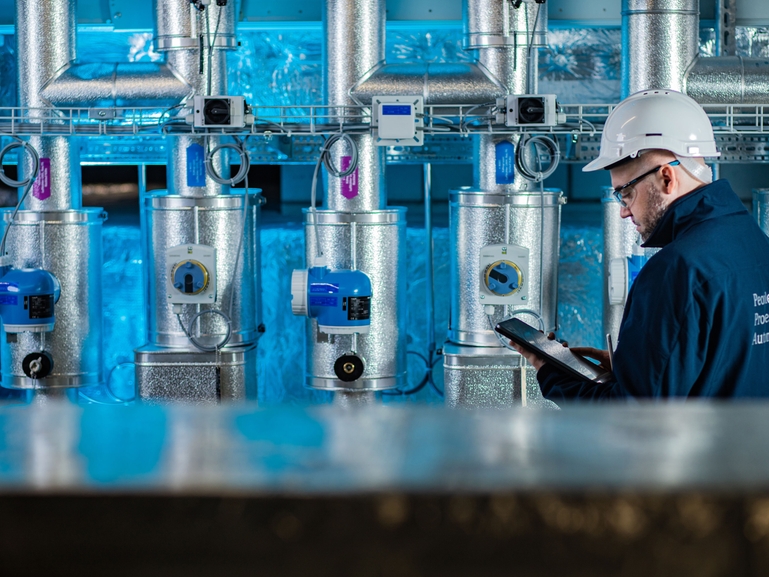
A man looking at a handheld device in front of a wall of Endress+Hauser Devices ©Endress+Hauser

Driving operational excellence in process industries 

Manufacturing execution systems (MES) and distributed control systems (DCS) play a key role in facilitating digitalization. And while both are effective at driving automation, different industries have different needs and might benefit more from one system over the other. MES supports quality control, traceability, and recipe management, while DCS focuses more on the control of the physical equipment and process stability and reliability.  

Ultimately, the end goal is creating a system that promotes digitalization and operational excellence. And to reach this goal, these systems rely on digitally enabled assets and the data they produce. Therefore, investing in high-quality measurement devices that feed into the system is key for smart manufacturing and to ensure accurate control and reliability. 

Maximizing efficiency with real-time data analytics   

Thanks to digitally enabled devices, access to real-time data and analytics is enabling plant operators to achieve unprecedented levels of efficiency. When data from your installed base is continuously collected and analyzed, it provides immediate visibility into how processes are performing and where inefficiencies may emerge. And execution systems, such as MES or DCS, act as the operational hub that consumes and contextualizes the data for plant operators. 

The integration of edge computing and cloud integration into the process industries is further enhancing the potential of these systems. Edge computing processes data near the source, ensuring low latency and operational availability for critical tasks such as quality checks and predictive alerts. While cloud connectivity extends their capabilities by aggregating data across sites, enabling advanced analytics and enterprise-wide visibility. Together, they form a hybrid model that supports both immediate operational control and long-term optimization of your processes. 

Reliance on secure connections grows, making protection a key concern as execution shifts to digital, interconnected, and software-defined systems. 

Secure your digital plant and build cyber resilience 

As execution becomes more digital, interconnected, and software‑defined, one unavoidable question emerges: How do we protect the systems that determine how production actually happens? 

尾注

Find out more about digitalization